
Andy Stanford-Clark

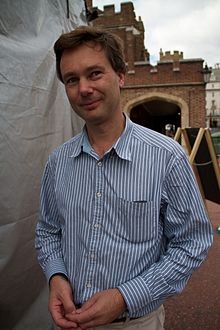
Bio/Description
Developer of home automation using Twitter to notify users of necessary changes in the home allowing for substantial energy savings, Stanford-Clark is a computer engineer at the forefront of research into "pervasive messaging" systems to keep humans informed about the performance of the objects around them. He has served as the Chief Technologist for IBM's Consulting Business in Energy and Utilities for the United Kingdom and Ireland, based at IBM's R&D headquarters in Hursley Park laboratories. Hursley House, an 18th Century stately home located in Hampshire, U.K., is where the Spitfire was developed during the Second World War. He and his team sought new ways to improve communication between people and things.
Stanford-Clark specializes in remote telemetry, energy monitoring and management, and smart metering and Smart Grid technologies, and has been able to apply his work to the home-front. He wired up his family home to Internet sensation Twitter so the building itself could 'tweet', utilizing his interest in home energy monitoring, home automation, demand-side management, and driving consumer behavior change. Concerned about how to maintain his idyllic Elizabethan cottage in a secluded part of the Isle of Wight in the U.K., he wondered how he would know when the heating was on for too long, an upstairs window was left ajar, or the garden hosepipe was dripping.
He was educated at Stockport Grammar School and the University of East Anglia, receiving a B.Sc. degree in Computing and Mathematics and a Ph.D. in Computer Science. Stanford-Clark has served as a visiting Professor at the University of Newcastle and joined IBM in 1991. Five years later, while working on an early website for the Wimbledon tennis championships, he invented load balancing technology to deal with sudden traffic spikes that is still used by websites today.
He is known for his lecture, "Innovation Begins At Home," where he explained how his hobby of home automation and his passion for energy saving at home led to projects that helped alleviate energy poverty in social housing, and provided new ideas for consumer behavior change and the future smart energy grid, which will include a mixture of micro-generation, electric vehicles, demand management, storage technologies and novel fuels for transport. Stanford-Clark has been named IBM Distinguished Engineer and Master Inventor. He is also a Fellow of the British Computer Society and holds more than 40 patents.
Citations:
-
Gender:
Male -
Noted For:
Developer of home automation using Twitter to notify the user of necessary changes in the home allowing for substantial energy savings -
Category of Achievement: