
Augusta Ada King, Countess of Lovelace

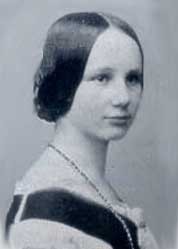
- (b.) 1815 December 10 - (d.) 1852 November 27
Bio/Description
Known as the "World's First Computer Programmer," Lovelace wrote notes on Charles Babbage's analytical engine that include what is recognized as the first algorithm intended to be processed by a machine. An English writer, she is sometimes portrayed as the "World's First Computer Programmer." As a young adult she took an interest in mathematics, and in particular Babbage's work on the analytical engine.
Between 1842 and 1843 she translated an article by Italian mathematician Luigi Menabrea on the engine, which she supplemented with a set of notes of her own. These notes contain what is considered the first computer program—that is, an algorithm encoded for processing by a machine. Though Babbage's engine was not built until nearly 150 years later in 1989–91, her notes remained important in the early history of computers. Lovelace also foresaw the capability of computers to go beyond mere calculating or number-crunching while others, including Babbage himself, focused only on these capabilities.
Though very ill as a child, she continued her education; she was privately schooled in mathematics and science by William Frend, William King, and Mary Somerville, and one of her later tutors was the noted mathematician and logician Augustus De Morgan. From 1832, when she was seventeen, her remarkable mathematical abilities began to emerge, and her interest in mathematics dominated her life even after her marriage. In a letter to her mother, De Morgan suggested that her skill in mathematics could lead her to become "an original mathematical investigator, perhaps of first-rate eminence."
She knew Mary Somerville, noted researcher and scientific author of the 19th century, who introduced her to Charles Babbage on 5 June 1833. Other acquaintances included Sir David Brewster, Charles Wheatstone, Charles Dickens, and Michael Faraday. Lovelace met and corresponded with Babbage on many occasions, including socially and in relation to his Difference Engine and Analytical Engine. Babbage was impressed by her intellect and writing skills, and he called her "The Enchantress of Numbers."
During a nine-month period in 1842–43, she translated Italian mathematician Luigi Menabrea's memoir on Babbage's newest proposed machine, the Analytical Engine. With the article, Lovelace appended a set of notes longer than the memoir itself, labeled alphabetically from A to G. In note G, she described in complete detail an algorithm for the Analytical Engine to compute Bernoulli numbers, which would have run correctly had the Analytical Engine been built.
In 1953, over one hundred years after her death, her notes on Babbage's Analytical Engine were republished. The engine has since been recognized as an early model for a computer and her notes as a description of a computer and software. The computer language "Ada", created on behalf of the United States Department of Defense, was named after her. The reference manual for the language was approved on 10 December 1980, and the Department of Defense Military Standard for the language, "MIL-STD-1815", was given the number of the year of her birth.
From 1998, the British Computer Society awarded a medal in her name, and in 2008 initiated an annual competition for women students of computer science. Lovelace has been portrayed in the film Conceiving Ada, the steampunk novel The Difference Engine by William Gibson and Bruce Sterling, and the webcomic 2D Goggles by Sydney Padua. March 24 in 2009 and 2010 was commemorated by some as Ada Lovelace Day, a day to celebrate the achievements of women in technology and science, with the 2011 Ada Lovelace Day falling on 7 October.
Citations:
-
Date of Birth:
1815 December 10 -
Date of Death:
1852 November 27 -
Gender:
Female -
Noted For:
Her notes on Charles Babbage's analytical engine include what is recognized as the first algorithm intended to be processed by a machine, thus she is known as the "World's First Computer Programmer" -
Category of Achievement: