
Giovanni Caselli

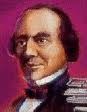
- (b.) 1815 April 25 - (d.) 1891 June 08
Bio/Description
Inventor of the pantelegraph (a.k.a. Universal Telegraph or "all-purpose telegraph"), the predecessor of the modern fax machine, Caselli put the world's first practical operating facsimile machine ("fax") system into use. Pantèlègraph is a word made up from "pantograph", a tool that copies words and drawings, plus "telegraph", an electromechanical system that sends messages through a wire over long distances.
At the beginning of his career he studied literature, history, science and religion. He was appointed a member dell'Ateneo Italian. Besides his interest in science and physics, he studied to become a Catholic priest and was ordained in 1836. In 1841 he went to Parma in the Province of Modena to become a tutor for the sons of Count Marquis Sanvitale of Modena.
In 1849 he participated in the riots and voted for annexation of the Duchy of Modena to the Kingdom of Sardinia, causing him to be forced out of Modena, whereupon he returned to Florence. In that year he became a professor of physics at the University of Florence, where he studied physics under Leopoldo Nobili. These studies involved electrochemistry, electromagnetism, electricity and magnetism. Caselli started a journal called "The Recreation" in 1851, which was about the science of physics written in laymen's terms.
While Caselli was teaching physics at the University of Florence, he devoted much of his research to the technology of telegraphic transmission of images as well as simple words. Alexander Bain and Frederick Bakewell were also working on this technology. The major problem of the time was to achieve perfect synchronization between the transmitting and receiving parts so they would work together correctly. He developed an electrochemical technology with a "synchronizing apparatus" (regulating clock) to make the sending and receiving mechanisms work together that was far superior to any technology Bain or Bakewell had developed.
Caselli completed a prototype of his system by 1856 and presented it to Leopold II, Grand Duke of Tuscany, in a demonstration. The Duke was so impressed with the device that for a while he financed Caselli's experiments. When the Duke's enthusiasm waned, he moved to Paris to introduce his invention to Napoleon III. Napoleon immediately became an enthusiastic admirer of the technology.
Between 1857 and 1861 he developed his pantelegraph (a.k.a. "autotelegraph") in Paris under the guidance of French inventor and mechanical engineer Leon Foucault. In 1858 his improved version was demonstrated by French physicist Alexandre-Edmond Becquerel at the Académie of Science in Paris. Napoleon saw a demonstration of the pantelegraph in 1860 and placed an order for the service within the French national telegraph network, which started the next year. Caselli had access to not only the French telegraph lines for his pantelegraph facsimile machine technology, but finances were also provided by Napoleon. His pantelegraph was so successful that Napoleon awarded him the Legion of Honor.
A test was conducted successfully between Paris and Amiens with the signature of the composer Gioacchino Rossini as the image sent and received, a distance of 140 km. A further test was then conducted between Paris and Marseille, a distance of 800 km, which was also successful. He demonstrated his pantelegraph successfully in 1861 at the Florence Exhibition to an audience that included King Victor Emmanuel, King of Italy. Parisian scientists and engineers started the Pantelegraph Society to share ideas and concepts about the pantelegraph.
The French Legislature and Council of State authorized a permanent line between Paris and Marseille. In England an experimental line was authorized between London and Liverpool for a four-month period. Napoleon bought his pantelegraph as a public service and put it into place for the transmission of images from Paris to Lyon. It remained in place until the defeat of Sedan in 1870. Russian Tsar Nicolas I put an experimental service in place between his palaces in Saint Petersburg and Moscow between 1851 and 1855.
In the first year of operation of the pantelegraph, the system transmitted almost 5,000 faxes, with a peak rate of 110 faxes per hour. In spite of all this, the technology developed so slowly toward full reliability that it eventually fell into oblivion. Caselli ultimately gave up on his invention and returned to Florence, where he died. It was another 100 years before his technology became popular.
French law was enacted in 1864 for the pantelegraph to be officially accepted. The following year, in 1865, operations started with the Paris to Lyon line, extended to Marseille in 1867. He patented his pantèlègraphe in Europe in 1861 (E.P. 2532) and in the United States in 1863 (No. 37,563). Alexander Graham Bell did not receive his telephone patent (No. 174,465) from the U.S. Patent Office until 1876.
Citations:
-
Date of Birth:
1815 April 25 -
Date of Death:
1891 June 08 -
Gender:
Male -
Noted For:
The inventor of the pantelegraph (a.k.a. Universal Telegraph or "all-purpose telegraph"), the predecessor of the modern fax machine -
Category of Achievement: