
John C. Freeman

Bio/Description
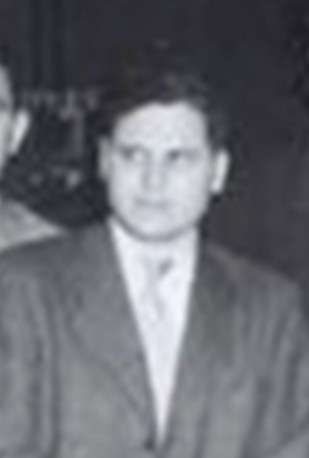
Co-developer of numerical models used in making the first successful computer weather forecasts, Freeman is recognized as a pioneer whose work made today's computer models for weather prediction possible.
A native Houstonian and lifelong meteorologist and oceanographer, Freeman worked in the field of meteorology and weather research from 1941 until his passing. His love of weather and science education touched the lives of many Houstonians, and others across the country. Born in The Heights, he graduated from Sam Houston High School and received a Bachelor of Science in Mathematical Physics from the Rice Institute in 1941.
He then attended the California Institute of Technology where he earned a Masters in Meteorology in 1942. Freeman received a Ph.D. in Meteorology from the University of Chicago in 1952. He conducted research for several major companies and organizations. Some of his most notable work included serving as a forecaster and researcher for the U.S. Army Air Force, U.S. Weather Bureau, Texas A&M University, Gulf Consultants, and the National Engineering Science Company. He also conducted research at the University of Chicago, the Institute for Advanced Study, and has served as Professor Emeritus at the University of St. Thomas.
He founded the Institute for Storm Research in Houston, Texas and continued as director from 1966 to 1987. Freeman has been an Assistant Scout Master in the Cypress, Texas area for many years as well as a charter member of the Jersey Village Volunteer Fire Department. Most of his final research before his passing in 2004 concerned the orbit of the Sun about the center of gravity of the solar system, and the effect of that orbit on sunspots and the Earth's long range weather patterns.
Of his past research, most notable was his continuing development of numerical models for use in weather forecasting. Today's computer models for weather prediction would not be possible without the work of the team of which Freeman was a member in 1950 at the Institute for Advanced Study. That team used the ENIAC (Electronic Numerical Integrator And Computer) at the Aberdeen Proving Ground in Aberdeen, Md. to make the first successful computer forecasts in 1950. Work continues today to define and predict the weather using mathematical equations. In 1950, a twelve-hour forecast was the goal; models today predict weather for the next 14 days.
He was the last surviving member of that team and was honored for his contributions on the 50th anniversary of Operational Numerical Weather Prediction and the creation of the Joint Numerical Weather Prediction Unit, held at the University of Maryland in June of 2004. The Joint Numerical Weather Prediction Unit was created in 1954. Freeman was also instrumental in the development of The Texas Radar Tornado Warning Network in 1954. He received numerous awards including the Award for Outstanding Contribution to the Advancement of Applied Meteorology, 2003, from the American Meteorological Society. In "Turing's Cathedral" by George Dyson, he is seen in a photo of The ENIAC meteorological expedition, Aberdeen Proving Ground, March 1950.
Citations:
-
Gender:
Male -
Noted For:
Co-developer of numerical models for use in weather forecasting at the Institute for Advanced Study which used the ENIAC Computer at the Aberdeen Proving Ground in Aberdeen, Md. to make the first successful computer forecasts, without which today’s computer models for weather prediction would not be possible -
Category of Achievement: