
Norbert Frištacký

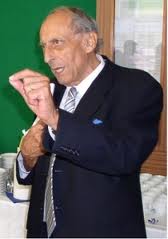
- (b.) 1931 November 18 - (d.) 2006 July 05
Bio/Description
Pioneer in digital computing and education at Slovak universities, Frištacký was one of the earliest to deploy and use digital computers at Slovak universities, and served as the first Rector of STU after the November revolution in 1989.
Frištacký spent his entire active working life at the Slovak Technical University in Bratislava. With his name will forever be associated the beginning of the transformation of the Slovak Technical University into a university compatible with the European educational space.
His computing career began at the Department of Automation and Control of the Faculty of Electrical Engineering STU. Following the establishment of an independent study program in electronic computers in 1974, he moved to the newly established Department of Computers, which he helped build alongside the newly created field of study. Frištacký himself introduced a series of courses in the field of logic systems and digital systems.
He significantly contributed to rebuilding the curriculum after 1989, which resulted in new programs and the establishment of new faculties — including the Faculty of Computer Science and Information Technology, at which he was the sponsor of the study program Computer Systems and Networks. He considered it essential to ensure that the subjects he lectured had available literature in the form of textbooks and university textbooks. Their use by students far exceeded the framework of the faculty and the university itself, and their quality was also reflected in the fact that they were of national character and were awarded by the Slovak and Czech Literary Fund for technical literature.
In research, Frištacký devoted himself to the analysis and design of digital systems. Notable were his early results in the compaction of microprogrammes and especially the development of the so-called SIPO architecture (Single Instruction-Parallel Operation), which corresponds closely to the well-known VLIW architecture. In his various leadership roles, he directed many research plans, faculty roles, and tasks of international cooperation.
Citations:
-
Date of Birth:
1931 November 18 -
Date of Death:
2006 July 05 -
Gender:
Male -
Noted For:
Piononeer in digital computing and devices -
Category of Achievement: