
Peter John Landin

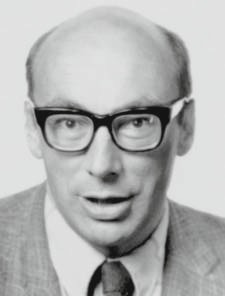
- (b.) 1930 June 05 - (d.) 2009 June 03
Bio/Description
One of the first to realize that the lambda calculus could be used to model a programming language, Landin made contributions essential to the development of both functional programming and denotational semantics. He was a British computer scientist, born in Sheffield, where he attended King Edward VII School. He graduated from Clare College, Cambridge University. From 1960 to 1964, he served as assistant to Christopher Strachey when the latter was an independent computer consultant in London.
Most of Landin's work was published during this period and the brief time he worked for Univac and at the Massachusetts Institute of Technology in the United States before taking a position at Queen Mary, University of London. During the 1970s and 1980s, his efforts went into building the Computer Science department at Queen Mary College, developing courses and teaching students. On his retirement, he was appointed Emeritus Professor of Theoretical Computation at Queen Mary, University of London.
At a workshop at the Science Museum, London, in 2001, on the history of programming semantics, Landin spoke of how his scholarly career in computer science began in the late 1950s and of how he was much influenced by a study of McCarthy's LISP when the most commonly used language was Fortran. He was active in the definition of the ALGOL programming language and was cited by Tony Hoare as one of the people who taught him Algol 60 and hence facilitated his expression of powerful recursive algorithms:
"Around Easter 1961, a course on ALGOL 60 was offered in Brighton, England, with Peter Naur, Edsger W. Dijkstra, and Peter Landin as tutors. … It was there that I first learned about recursive procedures and saw how to program the sorting method which I had earlier found such difficulty in explaining. It was there that I wrote the procedure, immodestly named QUICKSORT, on which my career as a computer scientist is founded. Due credit must be paid to the genius of the designers of ALGOL 60 who included recursion in their language and enabled me to describe my invention so elegantly to the world. I have regarded it as the highest goal of programming language design to enable good ideas to be elegantly expressed."
Landin was responsible for inventing the SECD machine, the first abstract process virtual machine ever defined, and the ISWIM programming language. He also defined the Landin off-side rule and coined the term syntactic sugar. The off-side rule allows bounding scope declaration by use of white spaces, as seen in languages such as Miranda, Haskell, Python, and F# (using the "light" syntax).
Another phrase he originated was "The next 700 …" after his influential paper The next 700 programming languages. "700" was chosen because he had read in the Journal of the ACM that there were already 700 programming languages in existence. His dry sense of humor was expressed in many of his papers.
Citations:
-
Date of Birth:
1930 June 05 -
Date of Death:
2009 June 03 -
Gender:
Male -
Noted For:
One of the first to realize that the lambda calculus could be used to model a programming language, an insight that is essential to development of both functional programming and denotational semantics -
Category of Achievement: