
Reona (Leo) Esaki

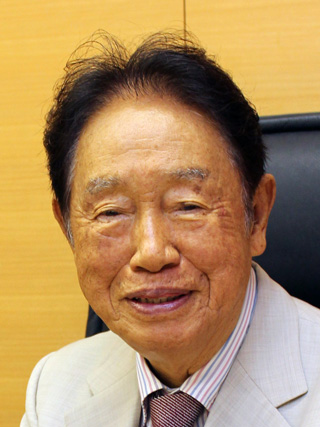
- (b.) 1925 March 12
Bio/Description
Inventor of the Esaki tunnel diode, the first quantum electron device, Esaki shared the Nobel Prize in Physics in 1973 with Ivar Giaever and Brian David Josephson for his discovery of the phenomenon of electron tunneling, having conducted his research around 1958. The Esaki diode exploited that phenomenon, developed while working at Tokyo Tsushin Kogyo (now known as Sony), where his research on heavily-doped Ge and Si resulted in this discovery.
Born in Osaka, Japan, he studied Physics at the University of Tokyo, receiving his B.Sc. degree in 1947 and his Ph.D. in 1959. Esaki moved to the United States in 1960 and joined the IBM T. J. Watson Research Center, Yorktown Heights, New York, where he became an IBM Fellow in 1967. He also contributed to the pioneering of the semiconductor superlattice while he was with IBM, and his first paper on the semiconductor superlattice was published during that period.
A comment he made in a 1987 issue of Current Contents regarding the original paper on superlattices noted: "The original version of the paper was rejected for publication by Physical Review on the referee's unimaginative assertion that it was 'too speculative' and involved 'no new physics.' However, this proposal was quickly accepted by the Army Research Office." Subsequently, Esaki has served as President of various Japanese universities including the University of Tsukuba and Shibaura Institute of Technology. In 2006 he became the President of the Yokohama College of Pharmacy.
He has also served as a Director of IBM-Japan, Ltd., on the Governing Board of the IBM-Tokyo Research Laboratory, a Director of the Yamada Science Foundation and the Science and Technology Foundation of Japan. In addition to the Nobel Prize and being named an IBM Fellow, Esaki received the Nishina Memorial Award (1959), the Asahi Press Award (1960), the Toyo Rayon Foundation Award for the Promotion of Science and Technology (1960), the Morris N. Liebmann Memorial Prize from IRE (1961), the Stuart Ballantine Medal from the Franklin Institute (1961), the Japan Academy Award (1965), and the Order of Culture from the Japanese Government (1974). He also received The International Center in New York's Award of Excellence, the American Physical Society 1985 International Prize for New Materials for his pioneering work in artificial semiconductor superlattices, and the IEEE Medal of Honor in 1991 for contributions to and leadership in tunneling, semiconductor superlattices, and quantum wells.
Esaki was named a Fellow of the American Academy of Arts and Sciences in May 1974, a member of the Japan Academy on November 12, 1975, a Foreign Associate of the National Academy of Engineering (USA) on April 1, 1977, a member of the Max-Planck-Gesellschaft on March 17, 1989, a foreign member of the American Philosophical Society in April 1991, and received the Grand Cordon of the Order of the Rising Sun (1998).
Some of his notable papers included: "Long Journey into Tunneling," Nobel Lecture, December 12, 1973; (1958) "New Phenomenon in Narrow Germanium p-n Junctions," Physical Review 109 (2): 603, Bibcode:1958PhRv.109.603E, doi:10.1103/PhysRev.109.603; with Tsu, R. (1970), "Superlattice and Negative Differential Conductivity in Semiconductors," IBM Journal of Research and Development 14: 61, doi:10.1147/rd.141.0061; and "This Week's Citation Classic," Current Contents No. 28, July 13, 1987. He held honorary degrees from Doshisha School, Japan, the Universidad Politecnica de Madrid, Spain, the University of Montpellier, France, Kwansei Gakuin University, Japan, and the University of Athens, Greece.
Citations:
-
Date of Birth:
1925 March 12 -
Gender:
Male -
Noted For:
Inventor of the Esaki diode, a type of semiconductor capable of very fast operation, well into the microwave frequency region, made possible by the use of the quantum mechanical effect called tunneling -
Category of Achievement: