Honor Database
Displaying 41 – 60 of 516 Honorees (Category: Hardware, with portraits)


Frank Hall Sumner
Co-developer of the implementation of Virtual Memory for the Atlas central processing unit — a concept now used in most computers — Sumner made a lasting contribution to modern computing. Born in Manchester,...

Alan B. Fowler
Researcher of statistical fluctuations in small semiconductor systems, Fowler is an American physicist born in Denver, Colorado. He graduated from Rensselaer Polytechnic Institute with a B.S. degree in 1951, an M.S. degree...

Robert (Bob) P. Colwell
Leader of the development of Intel's Pentium 4 CPU, Colwell is also recognized as the chief IA-32 architect on the Pentium Pro, Pentium II, and Pentium III microprocessors. An electrical engineer and...

Margaret R. Fox
Member of the technical staff of the Electronic Computer Laboratory at the National Bureau of Standards, Fox graduated from Wisconsin State College in 1940 and joined the U.S. Naval Reserve in 1943,...

Paul Eliot Green, Jr.
Co-creator of the Rake receiver and supervisor of its deployment in the first-ever spread-spectrum system, Green changed the landscape of electronic signaling. He was born in Chapel Hill, North Carolina, and was...
-

Hedwig (Hedy) Eva Maria Lamarr (née Kiesler)
Co-inventor of an early technique for spread spectrum and frequency hopping, Lamarr paved the way for today's wireless communications. An Austrian actress and inventor, Lamarr was born in Vienna, Austria-Hungary. She was a...

Ralph Ungermann
Co-founder of Ungermann-Bass (UB), the first large networking company independent of any computer manufacturer, Ungermann was considered to be a founding father of the data communications industry. He was often described as...

Sophie Wilson
Primary designer of the ARM microprocessor, Wilson is a British computer scientist and Fellow of the Royal Society (FRS). She was born in Leeds, England, and was educated at the University of...
-
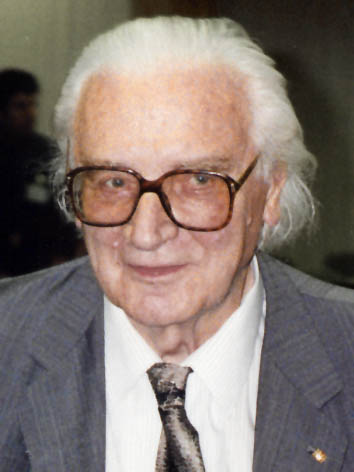
Konrad Zuse
German engineer who, completely independently of British and American computing efforts, built the Z3 (1941), the first working program-controlled general-purpose digital computer. The Z3, destroyed in the bombing of Berlin, never got...
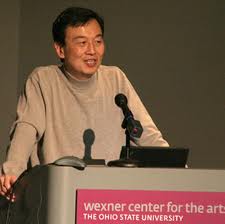
Wen-mei Hwu
Noted for his work in CPU microarchitecture and compiler optimization, Hwu completed his Ph.D. research at the University of California, Berkeley under Yale Patt. Their CPU microarchitecture projects, HPS and HPSm, were...
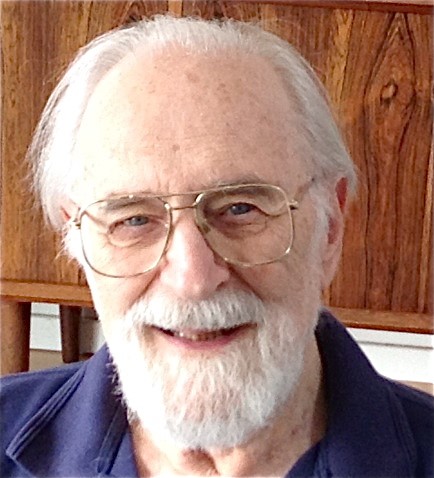
Maurice Karnaugh
Developer of the Karnaugh map, also known as the K-map, Karnaugh created a method to simplify boolean algebra expressions that was fundamental in the development of digital electronics and is provided for...

Carlo Heinrich Séquin
Pioneer in computer processor design, Séquin is a Professor of Computer Science at the University of California, Berkeley. He has worked with computer graphics, geometric modelling, and on the development of computer...

Charles R. Trimble
Developer of the Global Positioning System (GPS) for commercial and consumer applications, Trimble founded Trimble Navigation Limited (TNL) in 1978 along with two partners from Hewlett-Packard, initially operating from Los Altos, California....

Lewis Terman
Initiator of the first work in IBM on MOSFET memory, Terman was also involved in the program that led to the first IBM MOSFET memory product. Born in San Francisco, his father was...

Samuel Finley Breese Morse
Co-inventor of Morse code and contributor to the invention of a single-wire telegraph system, Morse was born in Charlestown, Massachusetts. After attending Phillips Academy in Andover, Massachusetts, he went on to Yale...

Gerd Binnig
Co-inventor of the scanning tunneling microscope (STM) and Nobel Prize winner in Physics (1986), Binnig was born in Frankfurt am Main and played in the ruins of the city during his childhood....

Peter Kogge
Designer of the Space Shuttle I/O processor — one of the first multithreaded computers and the first to fly in space — Kogge is a computer engineer and 1993 IBM Fellow who...

William (Bill) Worley Jr.
Principal creator of HP's two most important computer architectures, Worley's work includes PA-RISC (Precision Architecture—Reduced Instruction Set Computing) in the 1980s and PA-WW (Wide-Word) in the 1990s. He started programming in 1959 for...

John Whitaker Fairclough
Co-designer of Pegasus, which pioneered what was called a general register-set architecture now used in modern microprocessors that are a million times more powerful, Fairclough had a brilliant computer career. He also...

William Bradford Shockley
Co-inventor of the transistor, Shockley shared the 1956 Nobel Prize in Physics with John Bardeen and Walter Houser Brattain for this achievement. Shockley's attempts to commercialize a new transistor design in the...