ITHS Committees
Honor Committee
Choose whom we honor, curate our library of biographies, and tell each person’s story well.
2026
Committee
-
 B. Jack Copeland
-
 George Dyson
-
 Allan Olley
-
 Rene Speranza
-
 Aaron Sylvan
-
Join us

The Honor Committee decides whom the IT History Society honors and curates our library of more than 1,800 biographies. Our honorees range from pioneers that anyone learning the history of computing should know to contributors whose work was significant but under-documented, misunderstood, or overlooked.
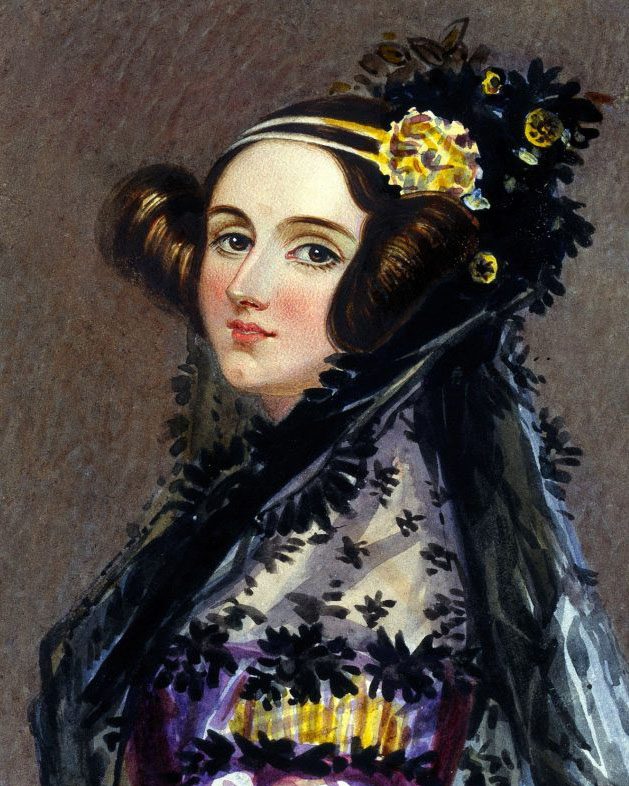
Ada Lovelace shows why the work matters. In 1843 she published a translation of a paper on Charles Babbage’s Analytical Engine, together with her own extensive Notes. Those Notes contain what is widely regarded as the first published computer program, and Babbage himself wrote that the algebraic working of its problems was entirely her own. She also saw, earlier than almost anyone, that such an engine might manipulate symbols as well as numbers, and might one day compose music. She did all of this for a machine that has never been built.
Lovelace, Grace Hopper, and Katherine Johnson now receive much of the recognition they deserve. Thousands of other contributors, across every discipline, industry, and era, still do not.
Every month
Each issue of our monthly newsletter features four honorees born that month, drawn from both the early history of computing and recent decades. The committee chooses them, writes a short profile of each, and makes sure each person’s biography on ithistory.org is accurate, well sourced, and well illustrated. If someone deserves a place and has no page yet, the committee adds one. Month by month, this is how our library of biographies gets better.
How we choose each month’s four
- At least one woman, in every issue.
- Members of other marginalized groups whenever we can.
- At least one figure from the early days of computing, and at least one contemporary.
- At least one famous name that anyone learning computer history should know, and at least one who is almost unknown.
That adds up to more than four, and it works because one person often meets several of these at once.
What else the committee does
- Identifies gaps in existing recognition and encourages new research into overlooked figures.
- Reviews nominations from members.
- Explains why each contribution mattered in its historical moment.
- Keeps a queue of future honorees, so good ideas from one month’s discussion are not lost by the time that month comes around again.
Who we are looking for
Historians of computing and technology, engineers and computer scientists with a deep sense of history, industry veterans, archivists and librarians, published authors in the field, and anyone with a demonstrated ability to bring technical, social, and institutional context together. Appointments to the Honor Committee are made by the Board.
Get involved
Email the Honor Committee at [email protected]. You can also reach the Society at [email protected], reply to any of our mailings, or contact one of us on LinkedIn.
We are also building a Discord community, still in its early days. This committee meets in #honor; if you are new to our server, join it here first.
Email the committee