Bruce Gilchrist
Honorees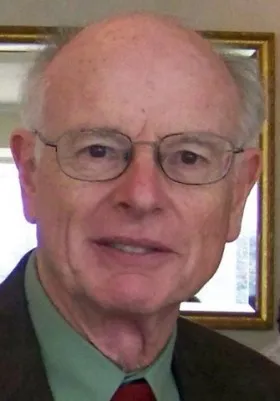
Co-inventor of a fast adder incorporating a speed-up technique for asynchronous adders — a design later used in the Philco TRANSAC S-2000 (1957), the first commercial transistorized computer — Gilchrist also served as Executive Director of AFIPS. He collaborated with the engineer James H. Pomerene on bettering the performance of cathode ray tube memory (the Williams tube developed first at the University of Manchester in England), writing diagnostic programs which allowed the team to make necessary adjustments for speed and reliability. Further collaborating with Pomerene and Y.K. Wong, they invented a fast adder which incorporated a speed-up technique for asynchronous adders, reducing the time for additive carry-overs to propagate. This design was later incorporated in one commercial computer, the Philco TRANSAC S-2000, introduced in 1957, the first commercial transistorized computer.
Born in Boston, Lincolnshire, England, he attended King Edward VII School in Kings Lynn and harbored a keen interest in computing and computing devices from an early age. In October 1948, after being awarded a State Scholarship, he started an accelerated applied mathematics degree course at Imperial College of Science and Technology of the University of London. In 1951, he attended a two-week course at Cambridge University given by Dr. Maurice Wilkes, the developer of the Electronic Delay Storage Automatic Calculator (EDSAC). He recalled that this was his first real exposure to computer programming, the problems of debugging, etc.
In the summer of 1952, Gilchrist received his Doctorate in Meteorology at the University of London. His Ph.D. thesis was entitled "The Application Of The Equations Of Motion To The Solution Of Climatological Problems." That same year, with a special interest in calculating methods for weather forecasting, and with funding arranged by the mathematician John von Neumann, he joined the Institute for Advanced Study in Princeton, New Jersey, supported on United States Smith-Mundt and Fulbright programs. He worked with Dr. Jule Charney, a gifted meteorologist and mathematician, on weather prediction calculations, programming the institute's IAS machine.
In the summer of 1956, the group he had been working with broke up after John von Neumann left the Institute for Advanced Study to join the United States Atomic Energy Commission (AEC). That same year, Gilchrist accepted an invitation to be an Assistant Professor of Mathematics and the first Director of the Computer Center at Syracuse University, where they had ordered an IBM 650 computer that was delivered a few months after he arrived that summer. He also became involved with the Association for Computing Machinery (ACM) and was elected to its national Council in 1958, serving as Secretary (1960–1962) and Vice President (1962–1964). This volunteer work put him into contact with a wide variety of computer users across the United States.
In the spring of 1959, he was asked by Dr. Herman H. Goldstine to join him at IBM Research as Manager of the Computing Facility. Gilchrist later became Director of Planning with its service bureau subsidiary, Service Bureau Corporation (SBC), from 1963 to 1965, and from 1965 to 1968 he served as a manager of IBM's Data Processing Division. In 1966 he was elected President of the American Federation of Information Processing Societies (AFIPS) and later served as its Executive Director from 1968 to 1973. He subsequently became Director of the Columbia University Computer Center in New York City from 1973 to 1985, and was also a member of the faculty of engineering at Columbia, retiring in 1991.
Having moved to Chappaqua, New York in 1959, Gilchrist was active in civic affairs, holding various positions such as Chappaqua School Board member and member of the Northern Westchester Board of Cooperative Educational Services, among others. From 1986 to 1989 he was elected supervisor of the town of New Castle, New York. He lived in Chappaqua from 1959 to 2008, after which he moved to Richmond, Virginia, with his wife, Bette.
He published numerous papers, including: with Pomerene, J. and Wong, S.Y., "Fast carry logic for digital computers," IRE Transactions on Electronic Computers, EC-4 (Dec. 1955), pp. 133–136; with Esterin, B. and Pomerene, J.H., "A Note on High Speed Digital Multiplication," IRE Transactions on Electronic Computers, vol. EC-5, p. 140 (1956); with Shenkin, Arlaana, "The impact of scanners on employment in supermarkets," Communications of the ACM, Volume 25, Issue 7 (July 1982), New York: ACM, pp. 441–445; and "Remembering Some Early Computers, 1948–1960," Columbia University EPIC, 2006, which contains some autobiographical material on Gilchrist's early involvement with computing. He was also the author or co-author of "Government regulation of the computer industry," Montvale, N.J., AFIPS with Wessel, Milton R., Press, 1972, ISBN 0-88283-028-7; and "The Descendants of CHARLES GILCHRIST and CATHERINE ROBINSON," Baltimore: Gateway Press Inc., 2004, Library of Congress Control Number 2003115956.
Citations: