Honor Database
Displaying 681 – 700 of 1,696 Honorees (with portraits)

Patrick Carl Fischer
His work on the mathematical foundations of database query languages became central to the databases now used by major web servers worldwide. Fischer was an American computer scientist and noted researcher in...
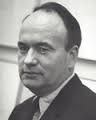
William (Bill) F. Beausoleil
Designer of some of the world's first silicon-based computer systems in the 1950s and 1960s, Beausoleil is a triple fellow of IBM, Cadence, and the IEEE. Born Oct. 24, 1929, the day...
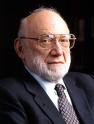
Joshua Lederberg
American molecular biologist known for his work in genetics, artificial intelligence, and space exploration, Lederberg was just 33 years old when he won the 1958 Nobel Prize for Physiology or Medicine for...

Ian Munro Ross
Co-inventor of epitaxy, used in silicon-based manufacturing processes for BJTs and modern CMOS and particularly important for compound semiconductors such as gallium arsenide, Ross was also an early pioneer in transistors who...

Tim Paterson
Author of MS-DOS, Paterson is a software developer whose work shaped the foundation of personal computing. In 1978 he designed a schematic of Microsoft's Z-80 SoftCard, which had a Z80 CPU and ran...

Andrei Petrovich Ershov
Pioneer of Soviet computer science, Ershov was responsible for the languages ALPHA and Rapira, AIST-0 the first Soviet time-sharing system, the electronic publishing system RUBIN, and MRAMOR, a multiprocessing workstation. He was...

Cleve Barry Moler
Inventor of MATLAB, a numerical computing package, Moler is an American mathematician and computer programmer specializing in numerical analysis. In the mid to late 1970s, he was one of the authors of...

John Norris Maguire
Founder of Software AG of North America, Inc. and overseas distributor of the Adabas system — a commercial relational database management system (DBMS) first developed for IBM 360 computers — Maguire built...


Alan Cooper
Inventor of Visual Basic, Cooper is sometimes called "the father of Visual Basic," although much of the work on Visual Basic was done by Microsoft's internal development group. Cooper was the leading...

Maxwell (Max) Herman Alexander Newman
Head of the department that built the world's first electronic stored-program digital computer, Newman was a British mathematician and codebreaker born in Chelsea, London, England. He attended Goodrich Road School, then City...

William (Velvel) Morton Kahan
One of the foremost experts on floating-point computations, Kahan is recognized for his fundamental contributions to numerical analysis and has dedicated himself to "making the world safe for numerical computations." Among his...

John Thomas Stasko, III
Renowned for extensive research in information visualization and visual analytics, as well as software visualization and algorithm animation, Stasko has served as a Professor in and the Associate Chair of the School...

John Impagliazzo
Noted IT historian, author, and Professor Emeritus of computing sciences at Hofstra University, Impagliazzo has supported educational computing activities for decades. His accomplishments include contributing to model computing and engineering curricula, publishing...
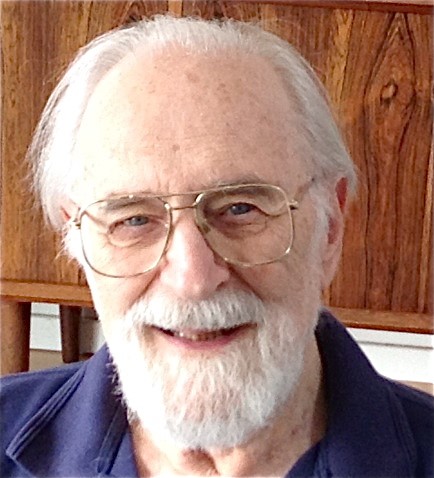
Maurice Karnaugh
Developer of the Karnaugh map, also known as the K-map, Karnaugh created a method to simplify boolean algebra expressions that was fundamental in the development of digital electronics and is provided for...
-

Francis (Frank) E. Hamilton
Responsible for the primary organization, design, and construction of the Automatic Sequence Controlled Calculator (Mark I) and the IBM Selective Sequence Electronic Calculator (SSEC), Hamilton was a pivotal figure in early computing....

Robert Cailliau
Co-developer of the World Wide Web, Cailliau is a Belgian informatics engineer and computer scientist who, together with Sir Tim Berners-Lee, helped bring the web into existence. Born in Tongeren, Belgium, he...

Irving Stoy Reed
Co-inventor of the Reed-Solomon error-detecting and correcting codes, Reed made many contributions to areas of electrical engineering including radar, signal processing, and image processing. He was part of the team that built...

Lawrence (Larry) G. Roberts
Developer of ARPANet and the Internet, Roberts served as chief scientist at the Advanced Research Projects Agency, where he and his team created packet switching and the ARPANet, which was the predecessor...
-

Vannevar Bush
The first presidential science advisor, Bush was an American engineer and science administrator known for his work on analog computing, his political role in the development of the atomic bomb as a...

Stanley Gill
Co-inventor of the first computer subroutine, Gill was a British computer scientist who shared that achievement with Maurice Wilkes and David Wheeler. Gill was born in Worthing, West Sussex, England, educated at...